

How to Measure for the Perfect Mirror Size (Indoors and Outdoors)
Choosing the right mirror size sounds simple. In reality, it’s one of the biggest reasons customers end up returning mirrors. Too small, and it looks lost. Too large, and it overwhelms the space.
Getting it right comes down to a few practical steps. No guesswork. No complicated maths. Just clear measuring and a bit of planning.
A mirror in the right size can completely change how a space looks and feels.
How to Measure for the Perfect Mirror Size?
This guide will walk you through exactly how to measure for the right mirror size, whether it’s for your living room, hallway, bathroom, or even your garden.
Why Mirror Size Matters More Than You Think
A mirror isn’t just functional. It shapes how a space feels.
- A well-sized mirror makes a room feel bigger and brighter
- A poorly sized mirror can throw off proportions
- The wrong size often looks like an afterthought
Most mistakes happen because people estimate instead of measuring. Even being a few centimetres off can make a noticeable difference.
Step 1: Decide the Mirror’s Purpose
Before measuring anything, be clear on what the mirror is for.
Ask yourself:
- Is it decorative or practical?
- Do you need to see your full reflection?
- Is it meant to reflect light or a view?
- Is it a focal point or a supporting feature?
Common uses:
- Above furniture (sofa, console, fireplace)
- Full-length mirror (bedroom, hallway)
- Bathroom mirror
- Garden feature mirror
Each purpose affects the size you need.
Step 2: Measure the Available Space
This is where most people go wrong. They measure roughly, or not at all.
Use a tape measure and note down:
- Width of the wall or area
- Height available
- Distance from surrounding objects
Write it down. Don’t rely on memory.
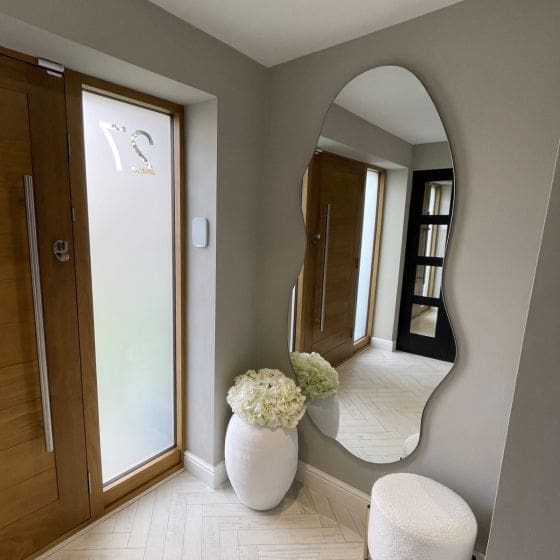


Step 3: Use the 2/3 Rule for Balance
A simple guideline that works in most interiors:
Your mirror should be around 60–75% of the width of the furniture beneath it.
Example:
- Sofa width: 180 cm
- Ideal mirror width: 110–135 cm
This keeps everything visually balanced.
Important:
Never choose a mirror wider than the furniture below it. It looks top-heavy and awkward.
Step 4: Consider Height and Eye Level
Height matters just as much as width.
For wall mirrors:
- The centre of the mirror should sit roughly at eye level
- Typically around 145–155 cm from the floor
For full-length mirrors:
- Minimum height: 140–160 cm
- Taller is usually better
You don’t need the mirror to show your entire body from top to bottom. A slightly angled mirror can do that. But going too small limits usability.
Step 5: Leave Breathing Space
Mirrors need space around them.
Avoid placing a mirror too close to:
- Ceilings
- Corners
- Light fittings
General spacing guidelines:
- Leave at least 10–20 cm above furniture
- Keep a gap of 15–30 cm from ceiling edges
- Avoid squeezing into tight gaps unless intentional
This spacing helps the mirror feel like part of the design, not crammed in.
Step 6: Use Tape or Paper to Visualise
This is one of the most practical tricks.
Before buying:
- Mark out the mirror size on the wall using masking tape
- Or cut paper/cardboard to size and stick it up
Stand back and look at it from different angles.
Ask:
- Does it look balanced?
- Is it too dominant?
- Does it feel too small?
This step alone can prevent most sizing mistakes.
Step 7: Measuring for Different Rooms
Living Room Mirrors
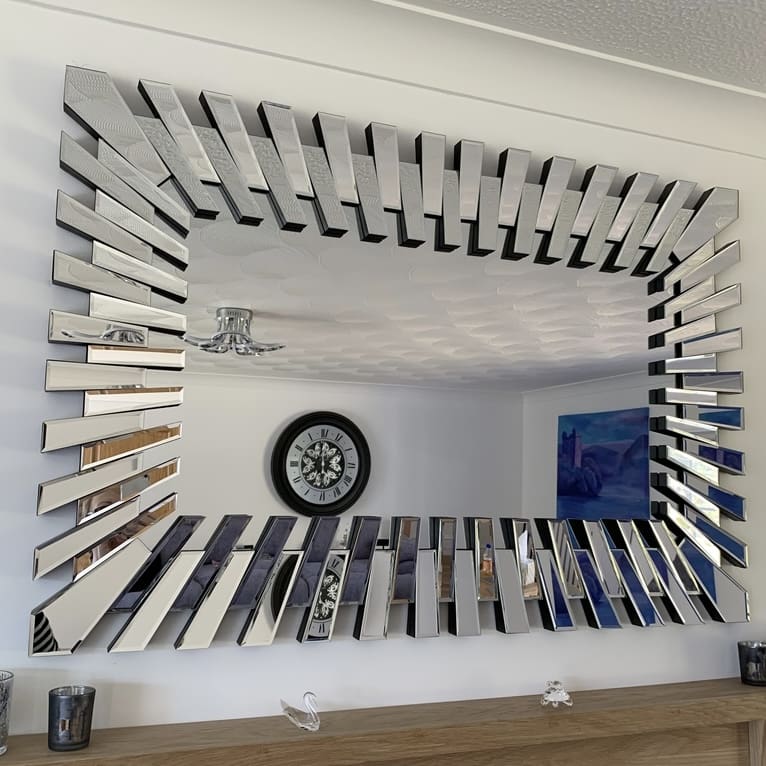
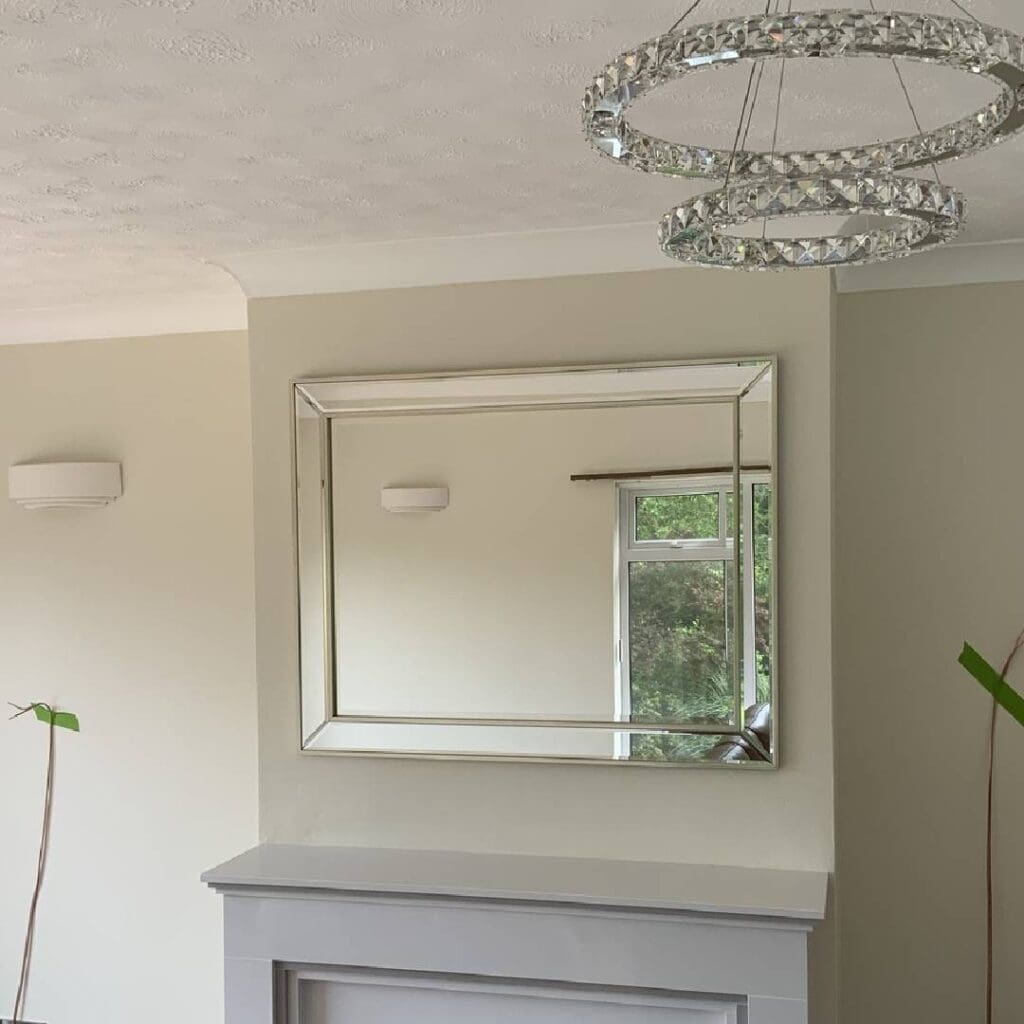
Mirrors are often placed above sofas or fireplaces.
- Stick to the 2/3 width rule
- Consider horizontal mirrors for wider spaces
- Use larger mirrors to reflect light and open up the room
Avoid small mirrors floating above large furniture. It looks disconnected.

Hallway Mirrors
Space is usually tighter here.
- Tall, narrow mirrors work well
- Full-length mirrors are practical for last-minute checks
- Keep enough clearance so doors don’t hit the mirror
If the hallway is narrow, avoid very wide mirrors. They can feel intrusive.
Bedroom Mirrors
Think about function first.
- Full-length mirrors should be tall enough for outfit checks
- Leaner mirrors can work if wall mounting isn’t ideal
- Above-dresser mirrors should follow the 2/3 width rule
Bathroom Mirrors
Precision matters more here.
- Mirror width should align with the sink or vanity
- Usually the same width or slightly smaller
- Height depends on ceiling and lighting placement
Make sure there’s space for lighting above or beside the mirror.
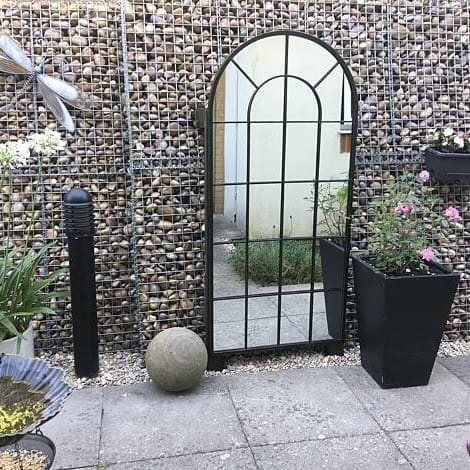
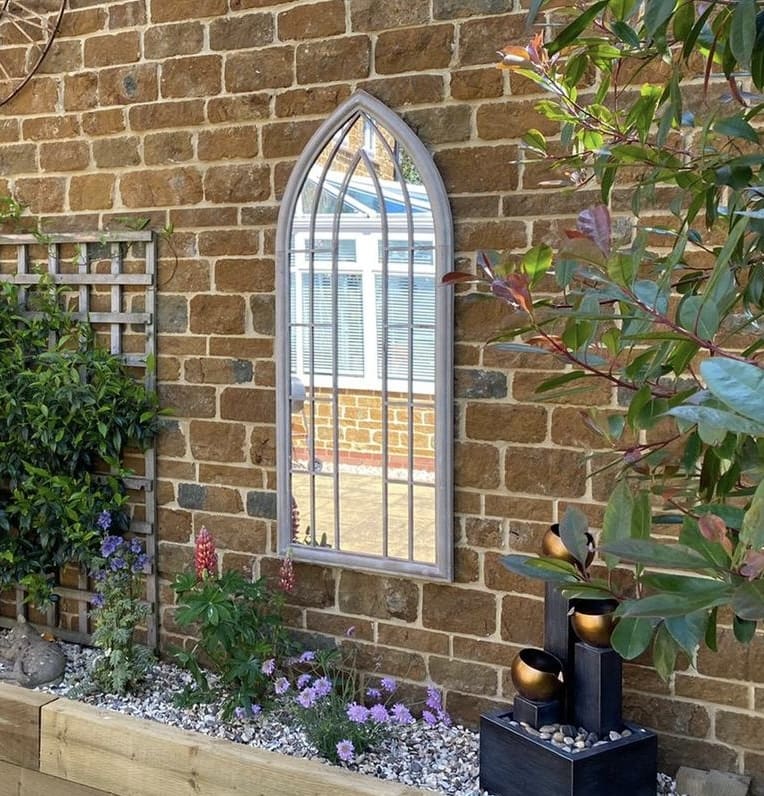
Step 8: Measuring for Garden Mirrors
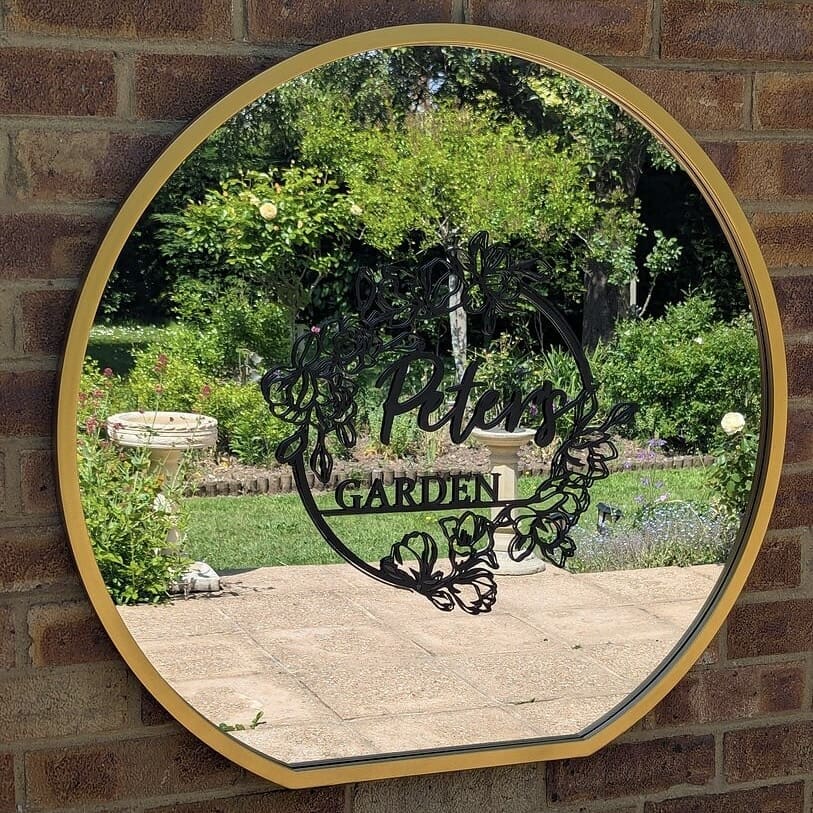
Outdoor mirrors are slightly different.
They are more decorative but still need proportion.
Key considerations:
- Wall or fence size
- Surrounding plants and features
- Viewing distance
Practical tips:
- Larger mirrors work better outdoors
- Small mirrors can look insignificant outside
- Place where they reflect greenery or light
Spacing:
Leave room around the mirror so it doesn’t get visually lost among plants or structures.
Step 9: Think About Frame Thickness
This is often overlooked.
A thick frame adds to the overall size.
Example:
- Mirror glass: 80 cm
- Frame: 10 cm each side
- Total width: 100 cm
Always measure the full external dimensions, not just the reflective area.
Step 10: Double-Check Before Ordering
Before you click “buy”, go through a quick checklist:
- Have you measured width and height accurately?
- Have you visualised the size on the wall?
- Does it match the furniture proportions?
- Have you considered spacing around it?
- Are you including the frame in measurements?
Taking five extra minutes here can save the hassle of returns.
Common Mistakes to Avoid
These are the most frequent issues that lead to returns:
1. Choosing too small
The mirror disappears into the space.
2. Going too large
It overwhelms the room or doesn’t fit properly.
3. Ignoring furniture proportions
Leads to imbalance.
4. Not accounting for frame size
Results in unexpected sizing issues.
5. Skipping the visualisation step
This is the biggest one.
Final Thoughts
Getting the right mirror size isn’t complicated. It just requires a bit of care.
Measure properly.
Follow simple proportion rules.
Visualise before you buy.
A well-sized mirror can transform a space. It adds light, depth, and style. But only if it fits the space correctly.
If you take the time to measure properly, you’ll get it right the first time—and avoid the frustration of returns.
Explore more insightful blogs on topics such as:
Can You Leave Garden Mirrors Out in Winter? Garden mirrors can stay outside over winter if you take a few precautions. Choose one made for outdoor use and protect it from harsh weather to keep it in good condition.
How Big Should a Round Mirror Be? Finding the right balance between style and practicality is key. This guide breaks down the ideal sizing for a round mirror, including what counts as large, and helps you choose the right fit based on your room’s proportions, placement, and overall look.